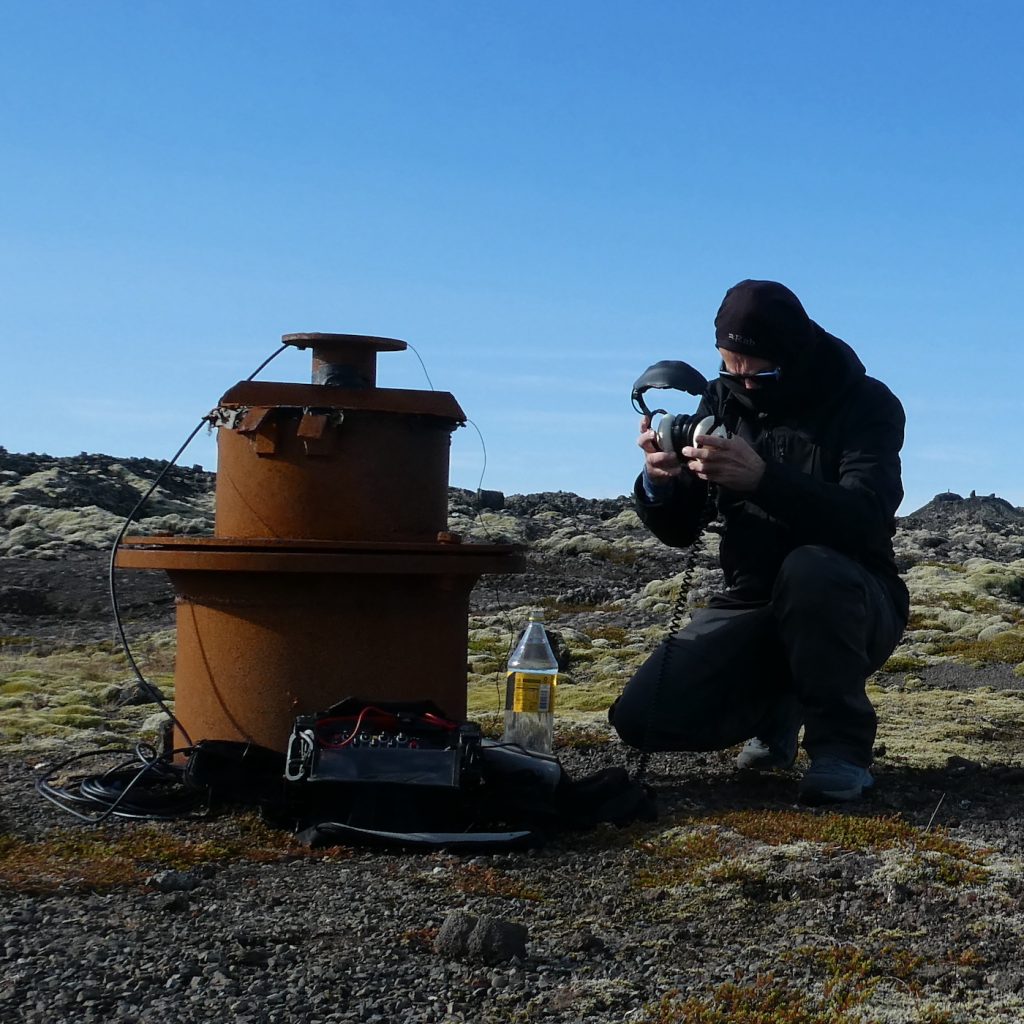
Recently I’ve noticed some interesting sound libraries being released from Hidden Sound. I reached out to them to see if we could learn more about the collections and the people behind them.
I was quite happy to meet the man behind Hidden Sound: Buzby Birchall. He and I chatted about how Hidden Sound began, the inspiration for the libraries and the future of Hidden Sound
Can you tell us a bit about yourself?
I tried writing the answer to this question a few times, waffled a lot – deleted everything – but I think the best concise answer that I want to give about myself is that my “freedom“ is something that I value more than anything.
You could strongly debate whether anyone is truly free in the world, I think maybe not, but I feel that have some sense of “freedom“ within my life.
Since I was a very young child I knew that I never wanted to get married, never wanted kids, I didn’t want to own a house and fill it with dust-collecting objects and I definitely didn’t want a job which involved giving up a large portion of each day to do something that I didn’t make me happy.
So working for myself, doing something I love and knowing that if I want to pack a bag and book a flight to somewhere at anytime – or take a random day off – makes me happy and gives me a certain sense of “freedom“.

Can you tell us why you first started field recording?
The first memory I have of making some sort of “field recording” would be when I was about 10 – 12 years old.
I owned a Sony cassette player with a built-in mic and I found myself pointing the microphone at various things just because I guess in essence I was still a kid and just did it out of curiosity without too much thinking as such.
My first attempts at recording my own field samples for my own music was with a Sony mini disc player and a Sony microphone that plugged into it via a 3.5 mm jack.
I would then burn the sounds from mini discs to full sized CD’s on a Marantz CD player / burner and tried blending the sounds together using 3 of the really early Pioneer CDJ decks.
It was a bit of an unorthodox, maybe clumsy way to go about this but it was the equipment that I had at the time.
Why did you create Hidden Sound?
Over time I’ve been involved in various areas of audio work but I really started to explore field recording more under the name Hidden Sound during the COVID period.
Film work had dropped off in Iceland, as it had in a lot of other places around the world and I had some equipment that I had bought for doing bits of work as an assistant sound guy/boom op (Sound Devices 633, various Sennheiser and DPA mics etc.).
For most of the COVID period I was living in a small cabin in a fjord in Iceland away from everyone so I did n’t feel the effect of the lockdowns so much – I was just going out in my car, driving around and field recording.
I started Hidden Sound because I wanted to license my recordings online and for some time I wanted something that would create a passive income.
The name Hidden Sound fits really well now as I love using contact mics and tend to get most pleasure from hearing sounds which are hidden until revealed by contact mics.

Your sound libraries are very focused, and highlight unusual sounds or subjects. Can you tell readers your approach to field recording this way?
The Creative Field Recording Guides were the first material that I read on field recording and thanks to them I really took on the importance and enjoyment of scouting trips and to resist the temptation to take even a handheld recorder with me.
I think taking any kind of equipment on scouting trips breaks the flow of the scouting adventure a little – I find that for me, it’s too easy to keep stopping to record things when further down the road a hidden gem could be waiting to be found.
Sometimes I will walk out the door or get in the car, get to the end of the road and think “ok .. left or right?” … and the rest of the scouting trip will be like that. I love random road trips to see what turns up.
Sometimes I will search for a subject online first – let’s say for example I’ll look up “shipwrecks” in my area and then go check them out.
I‘ll stay at a location for a while, shut my eyes (very important) and listen to the surroundings and I’ll put my ear to things for a contact mic perspective.
I like to think my recordings through a bit and take photos of the subject and location for further speculation later on.
I’ll also do research for things which might affect the recording – weather, busy times of day etc. which is standard practice.
I find that when I come back to the subject that I mostly know how I want to approach the recording. I like this way of doing things as opposed to arriving at a location and thinking “ok where do i start” – at least I have a starting point when I arrive back at a location but of course it’s not always like that – some days I’m just out with my equipment and will find something and record it on the spot.
Also what I will try to do with scouting trips is find a variety of subjects which means that no matter where I am located the weather will not cancel a day’s recording.
So to give some examples – I might try to take note of locations which I can record when there is only wind – metal gates for a Wind Through Metal Gates Library.
Or if it is raining then maybe I could go to an abandoned shed which I have located with an iron roof which will capture nice rain on metal sounds.
If the weather is completely still then maybe it would be good to go to an area of woodlands where I can capture bird sounds without the sound of the wind rustling the leaves if I wanted that.
I find that it is good to have these options listed so that on a recording day I don’t have to drive around trying to find something to record based on the weather.
Also I want to experiment more with mic positions which aren’t strictly adhering to ORTF/NOS/XY or other mic configuration rules.
For example I was listening to a friend’s house in Iceland moving in a storm. There were so many parts of the house that were creaking or rattling and I sat wondering about the what the best mic configurations and placements would be when what I really want to do is close mic as many of the individual parts of the house that were making sound and maybe stick a couple of omni’s or a binaural head in the middle of it all.
The various parts of the house were so far apart that at a guess, I would say that they would sound not so great when summed together but I mostly export my files as raw ISO’s and license them in packs that way. So from that angle, one important factor for me would be to capture good individual ISO tracks and leave the nightmare of mixing them together to someone else – haha – sorry.
If I was buying source sound libraries then that is how I would like to buy them. I know some people want files exported, mixed and mastered so that they can be dropped into a project but if it were me I would like to just put them together and process them myself to my tastes.
But I understand that can be too time-consuming for some people on deadlines so maybe it is a good idea in the future for me to include some mixed tracks (I have done it on a couple of occasions) but I think I would outsource that work.
Which are some of your favorite sound libraries that you’ve released? Why are they special or how can they help sound pros?
This is really difficult to choose because for me this is not only about what my favourite sounds are but also I connect different feelings to different field recording libraries, so my answers combine the two elements… most libraries have some sort of strong memory attached to them.
Here are 3 which spring to my mind first…
-
Wind Through Metal Gates
This was the first library that I recorded using contact mics and I was lucky enough to get my hands on some top quality ones (Stille & Klang) made by a guy called David Stalling in Ireland.
Not long after getting a pair of the Stille & Klang’s I went out exploring in a fjord in Iceland called Hvalfjörður where I was renting a small cabin.
I found some large metal gates on a small, remote cement making plant and hooked up the contact mics to them.

There was a really gentle breeze blowing but no audible sound coming from the gates until I listened via the contact mics and a Sound Devices MixPre-10 II and suddenly I could hear an orchestra of atonal bangs and resonant hits.
So I sat down and listened and recorded for a good couple of hours whilst looking out into the beautiful scenery of Hvalfjördur.
It was a moment that made me happy after a difficult period as my Mother, who I was very close with, passed away not long before. It was a moment of normality again but one that I was really grateful for.
That first gate recording really shaped my summer. The whole recording adventure for Wind Through Metal Gates involved driving around this stunning fjord looking for remote gates and I just loved the recordings and the days of listening to these sounds whilst taking in the scenery.
-
Wind Turbines Inner Sounds
I was re-visiting Galway in West Ireland (I had lived there for 18 months before moving to Iceland) and took a recording trip to an area full of wind turbines.
I attached contact microphones to the body of the turbines and to the metal steps which led up to the entrance of the turbine and also used a LOM Geofon and spike attachment in the ground surrounding the turbines.
I was walking from one area of turbines to another and passed through an area with a thin wire fence and decided to attach a Stille and Klang contact microphone to it. It was the craziest hidden sound I have heard through contact mics.
The fence picked up so much sound from a number of the surrounding turbines – it was evolving – sound designed – organic sci-fi.
What I loved about this was not only how mad the sound was but the thought that we are surrounded by objects which are resonating and harbouring sound that we don’t hear. We’re surrounded by and living in multiple, inaudible and unseen microcosmic hidden universes of sound and sight – I just think it’s so cool.
If you listen to the first 50 seconds of the SoundCloud link you will hear the sounds through the wire fence.
-
Storm in a Shipping Container
This was one of my first field recordings and was an awesome listening experience.
I was staying in Grindavík in the Reykjanes Peninsula in South Iceland and a huge storm hit the area with the winds reaching up to 40 metres per second/140 kilometres per hour.
There was an empty shipping container close to where I was staying so I went in with a recording rig and closed the door. In retrospect it could have been a bad decision in terms of safety but that kind of added to the excitement of sitting inside of the container.
The amazing sounds of storm power, the metal resonating with the wind and objects being blown around outside, coupled with the visual deprivation in the darkness was insanely cool.
This listening experience made me think about how actively we actually listen to things and I tried a listening experiment after this recording.
The way I think of it is like this – I think that we maybe detect sound and automatically register the sound and the name of the object which is identified with the sound without taking notice of its details – so in essence listening passively.
I tried to imagine myself as a human in a pre-language state, like an infant before it has learned any language or as my friend puts it “terminological overlay” of everything in our surrounding environment.
For example – traffic – we hear so much traffic in our lives that it just occurs in the background and in a way we dismiss the sound, it happens, we know it’s traffic and that’s as far as the listening experience goes.
So I tried listening to traffic and other everyday sounds in the mind state of a pre-language human and also tried to listen without the constant internal narrative of our everyday lives chatting away in our minds – the to-do list, what do I need to buy at the store? etc..
It is really hard to do this for any period of time before the mind wanders or the chatter begins but I found that when I managed to listen to something in this state of mind then the tones, textures, panning and movement of such sounds are amazing.
When you are a pre-language human you are bathed in 360 degrees of sound without the mind labelling and naming the sound and I found that when I manage to listen like this for any length of time then there is a certain feeling that comes with it – it’s hard to describe it – expansiveness maybe…?


To answer the question of why are these libraries special? I think they are special to me on a personal level as opposed to them being special in terms of audio quality compared to the content that other field recordists put out.
I cannot say they would help the sound pros but I think we can learn from anyone regardless of their technical skills or experience – maybe it is possible for a more experienced field recordist to learn from a novice´s naive approach to recording, I don’t know… I try to remain open to learning from anyone, about anything.
If there are any pros (or novices) reading this then maybe there is something in this interview which sparks something – I have no idea what it might be though.
I noticed on your site that you recently downsized so you can travel the world and record sounds. Can you tell readers a bit about your plans?

I’m a little cautious to talk about plans as so many things have delayed or changed the course of previous plans, which of course is just life.
I actually started the travelling/recording adventure 14 years ago – I bought an Edirol R-09 handheld recorder and booked a trip to Argentina, Ecuador, Chile and Japan.
I was stopping off in the UK to visit my Mother before going on the trip and when I called her from Heathrow to let her know that I had landed safe in the UK, she told me that she had collapsed that morning and that she would not be able to return to work.
I knew then that my immediate future was going to change big time as there was no-one else helping her.
The next 10 years really revolved around taking care of my Mother as her health declined, which was difficult in itself but the situation was littered with constant, external complications.
After she passed away in 2020, I started recording again with a view of travelling but then the impact of taking care of my Mother for such a long period caught up with me and my own health suffered.
After her passing I managed to do some recording for Hidden Sound in between periods of burn out.
It wasn’t really until mid 2024 that I got on top of my health and have been putting out regular content since.
And now the dream again is to travel and record – I have some upcoming trips overseas which I am really hyped for.
What’s next for Hidden Sound?
Again I am a bit reluctant to talk about plans but my hopes are:
-
After going through 3 nasty burn outs my priority is my health, fitness, mobility and flexibility because without those elements there is no Hidden Sound.
I heard a nice quote recently from a Shaolin monk called Shi Heng Yi and it was something like “When you are healthy you might have thousands of problems in your life but when you are sick, you only have one problem in your life.”
Another one I like is “If you don’t take a break, the break will take itself” – although this is something I am still a bit guilty of doing.
-
More travelling and recording adventures, meeting new people.
-
At the time of writing I am collaborating on some sound effects packs with some excellent sound designers and want to do a lot more of these in the future.
-
In the future I would like to use some of the money generated from Hidden Sound sales for positive endeavours.
My thanks to Buzby for his interview.
Hidden Sound has a special offer for all readers. Subscribers get one email each month with a heavily discounted, one time pre-release offer. People can add their names to the mailing list here.
To stay in touch, follow us on BlueSky, Facebook, and receive free updates by email newsletter or RSS feed.

Follow Us